Kitchen blinds – How to choose blinds for your kitchen?
In most homes, the kitchen is a place where people spend a lot of time every day. That is why it is important that kitchen window coverings are both practical and visually suitable for the space. From a practical perspective, blinds are often a much better choice for kitchens than traditional textile curtains. Kitchen blinds need to withstand moisture, temperature changes, and be easy to clean.
In this article, we take a closer look at which blinds work best in the kitchen and how to choose a window covering that lasts long and looks good.
Which blinds are suitable for the kitchen?
Since kitchens often produce moisture, steam, and grease, the chosen window covering should be durable and easy to maintain. Another big advantage is when the blinds allow the windowsill to remain free, and the window can be opened or tilted for ventilation without needing to roll the blind up.
This does not necessarily mean that classic roller blinds cannot be used in kitchens at all, but in everyday practical use, there are alternatives that are more convenient—especially in kitchens where windows are opened more often than in other rooms.
The most popular and practical options for kitchen blinds are cassette blinds and pleated blinds.
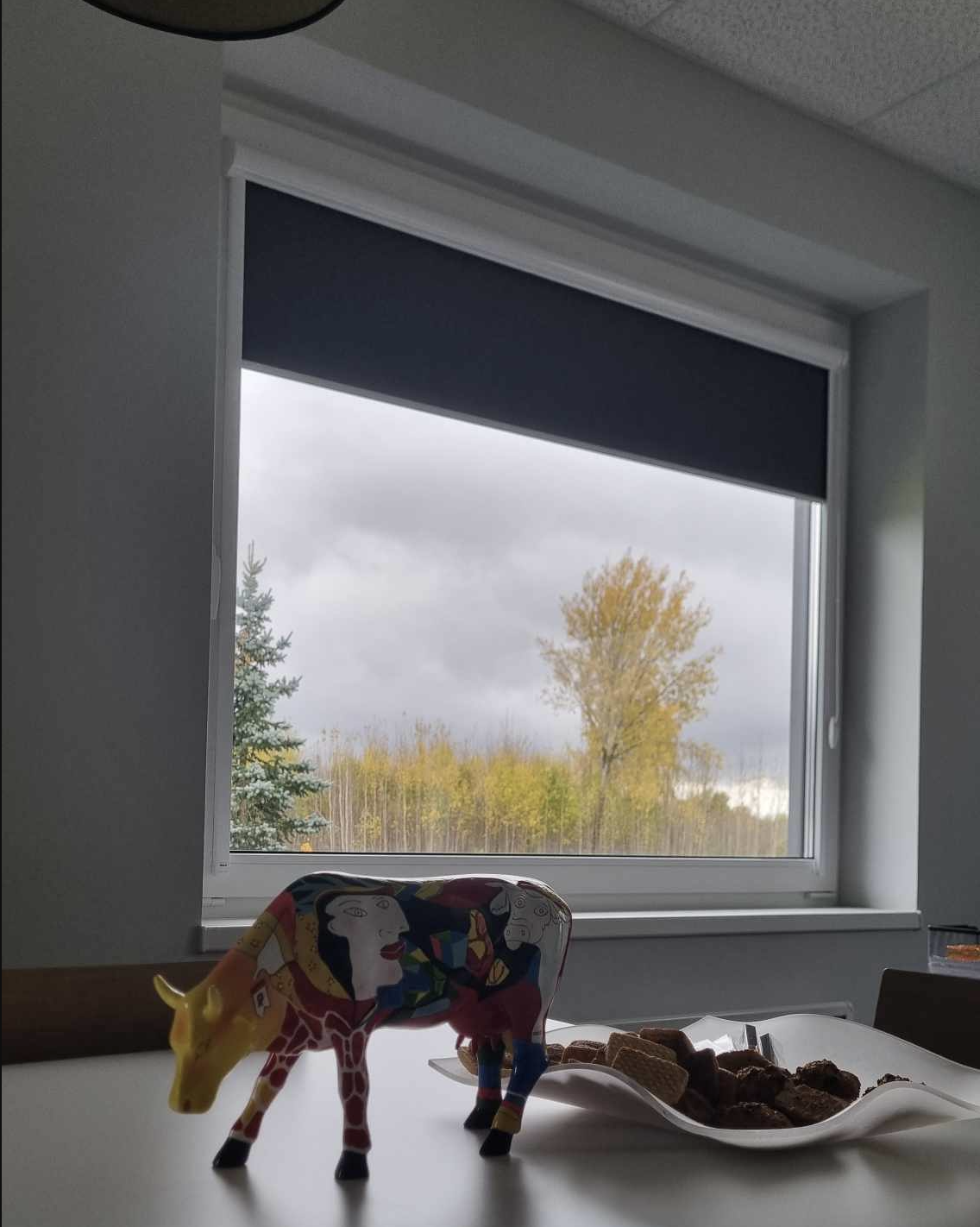
Cassette blinds are mounted directly onto the window frame, and the fabric moves between side guides attached to the cassette. This allows the blind to perform its main function—providing privacy and protection from direct sunlight—even when the window is in a ventilation position. The window can be opened without rolling the blind up, which makes this solution particularly practical in the kitchen. The cassette also protects the blind fabric from dirt, steam, and grease. In smaller kitchens, another clear benefit is that the windowsill remains free.
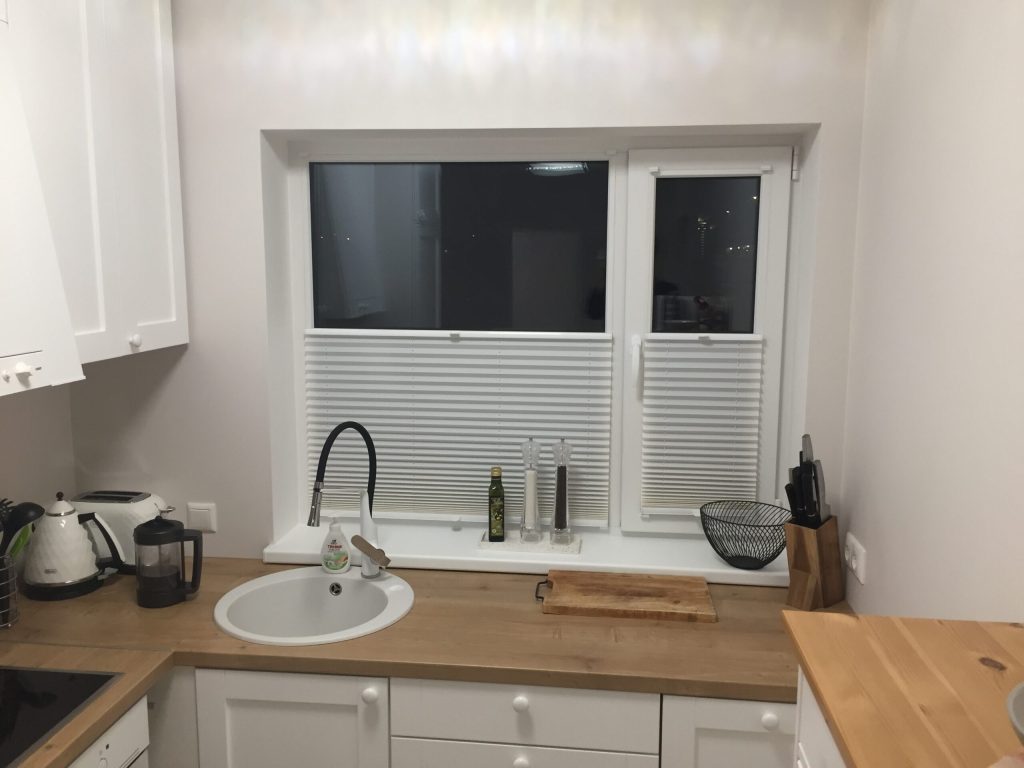
Cassette blinds are not always suitable for modern kitchens with wide but narrow windows above the worktop, because the cassette and window handle may interfere with each other. For this type of window, pleated blinds are usually a better choice.
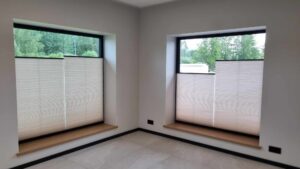
Pleated blinds are installed similarly to cassette blinds, directly onto the window frame. What makes them unique is the ability to open the blinds from both the top and the bottom. By covering only the lower part of the window, natural daylight can still enter the room while maintaining privacy.
What type of fabrics work best in the kitchen?
The kitchen is a room where natural light is generally very valuable. At the same time, especially during summer, strong sunlight from south- or west-facing windows can make the kitchen uncomfortably warm.
Kitchen blinds are best made from semi-blackout fabrics that allow light in while softening it. Cassette blinds and pleated blinds provide privacy and create pleasant lighting that does not glare, while still keeping the room bright enough.
Day & Night blinds (Zebra)
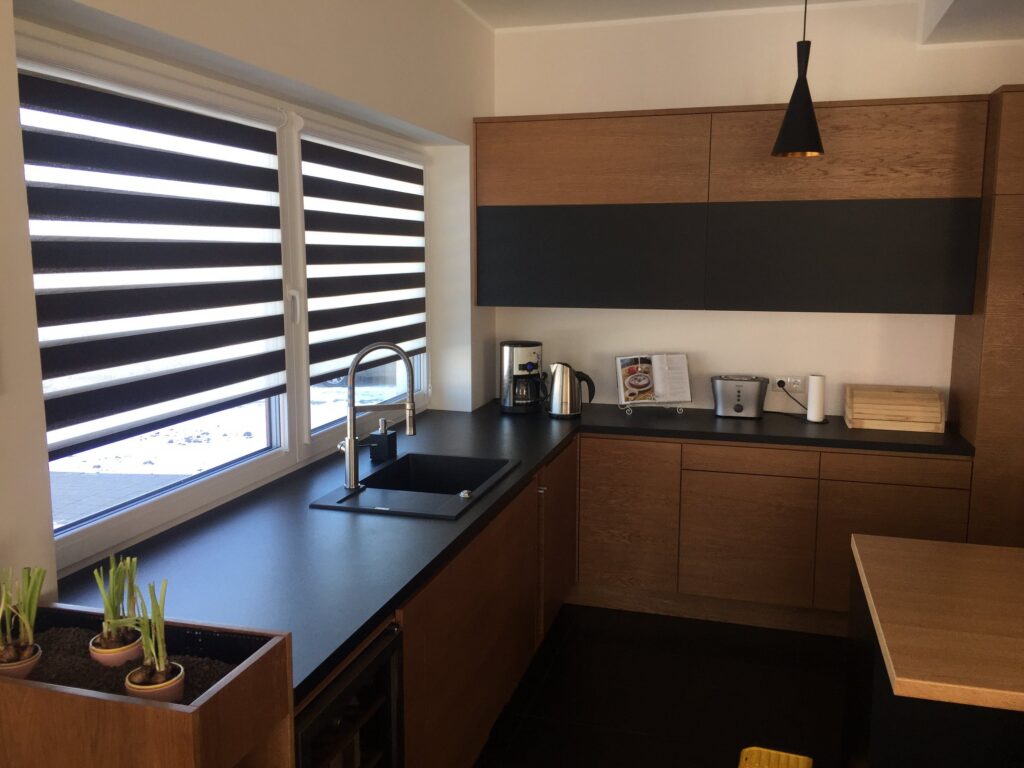
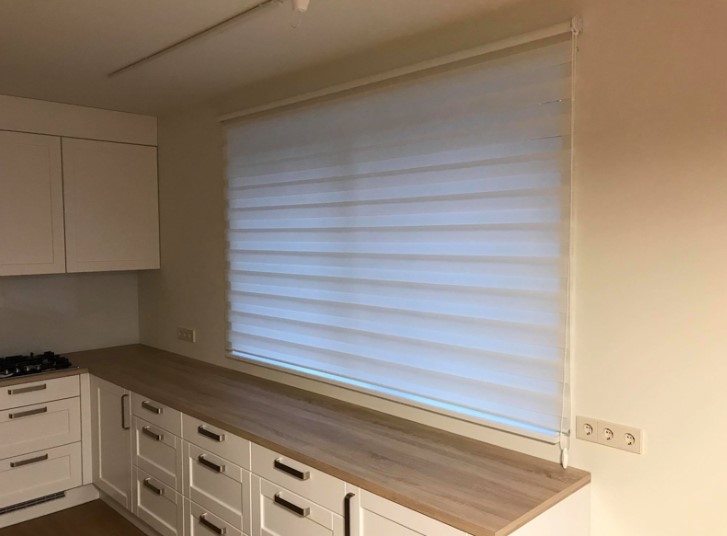
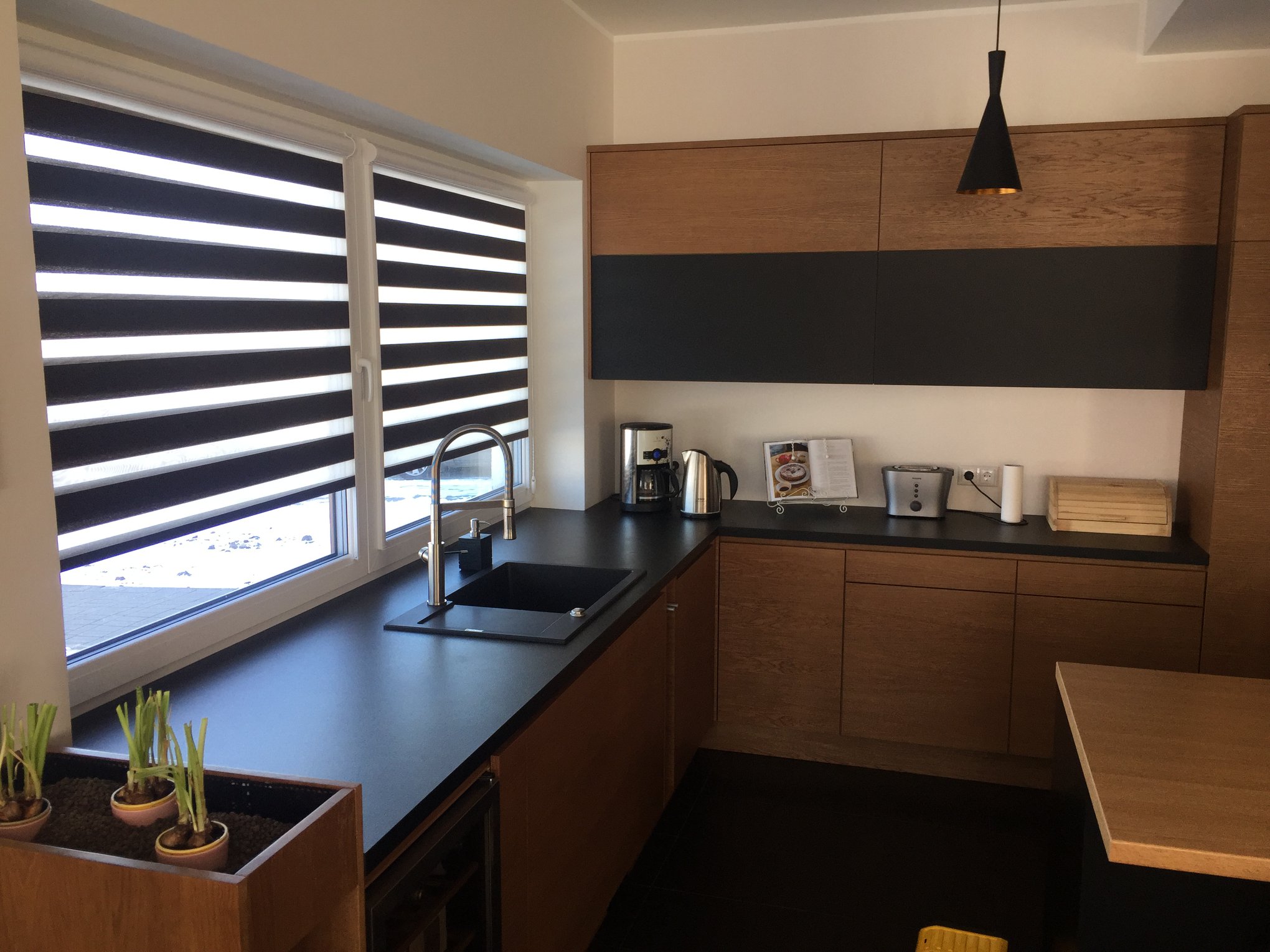
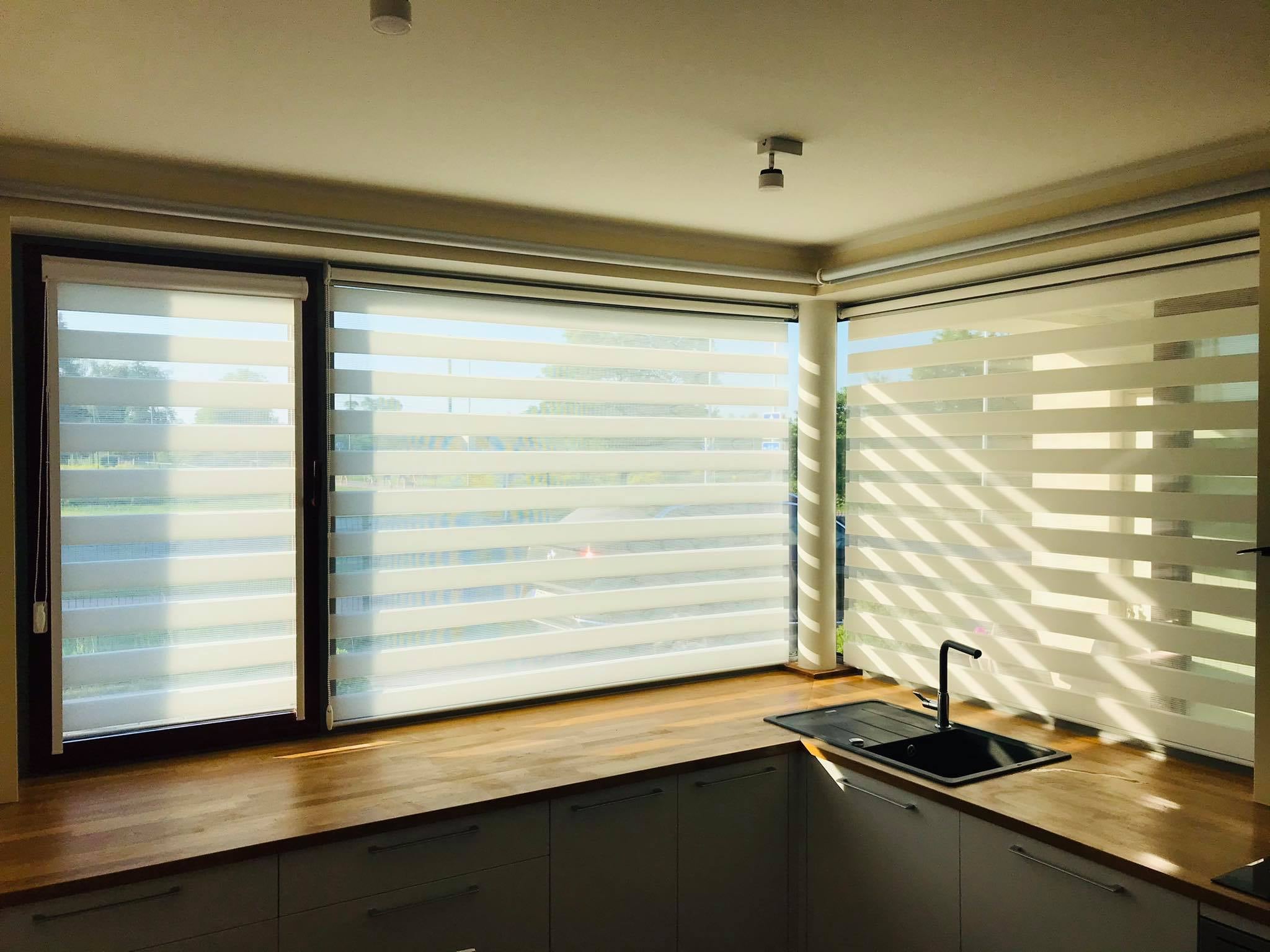
“Day & Night blinds”, also known as zebra blinds, are another solution available in the Rulo product range and work very well in kitchens. Zebra blinds consist of two layers of fabric and allow you to control light transparency depending on whether the stripes of the two fabric layers overlap or alternate. At the same time, the blind can still be rolled up like a traditional roller blind.
Moisture-resistant pleated blinds
If the kitchen windows are located very close to the stove or sink, moisture-resistant pleated blinds can be a practical solution. These blinds are commonly used in bathrooms and are better able to withstand moisture and splashes compared to regular fabrics.
What color blinds work best in the kitchen?
The color of blinds can influence the overall atmosphere of the kitchen more than one might initially expect. Light-colored blinds make the space feel visually larger and brighter. That is why white, light grey, or sand-colored tones are often used in kitchens.
If the kitchen includes many wooden surfaces or natural materials, warmer neutral tones also work well. Beige or natural fabric shades create a calm and cozy environment.
In some kitchens, blinds can also serve as a design accent. In this case, patterned fabrics or slightly stronger colors can be used. This works particularly well in modern kitchens where the goal is to add personality to the space.
Summary
Kitchen blinds should primarily be practical and durable while also fitting the overall visual style of the room. The right window covering helps regulate daylight, protect the space from excessive sunlight, and adds a cohesive look to the kitchen.
The recommendation from Rulo.ee is to choose cassette blinds or pleated blinds made from semi-blackout fabric for the kitchen. These keep the windowsill free and ensure privacy even when the window is in a ventilation position. At Rulo.ee, you can order kitchen blinds made precisely to your window measurements.
You can find photos of kitchen blinds ordered by our customers in our Facebook gallery.